SDS Group: The “Boring” Bakery Stock That EPF Thinks Is Brilliant
Discover why Malaysia’s EPF increased its stake in SDS Group — a Johor-born bakery business that’s quietly becoming a recession-proof success story.
When Malaysia’s biggest pension fund starts buying more bread, both figuratively and literally, you pay attention.
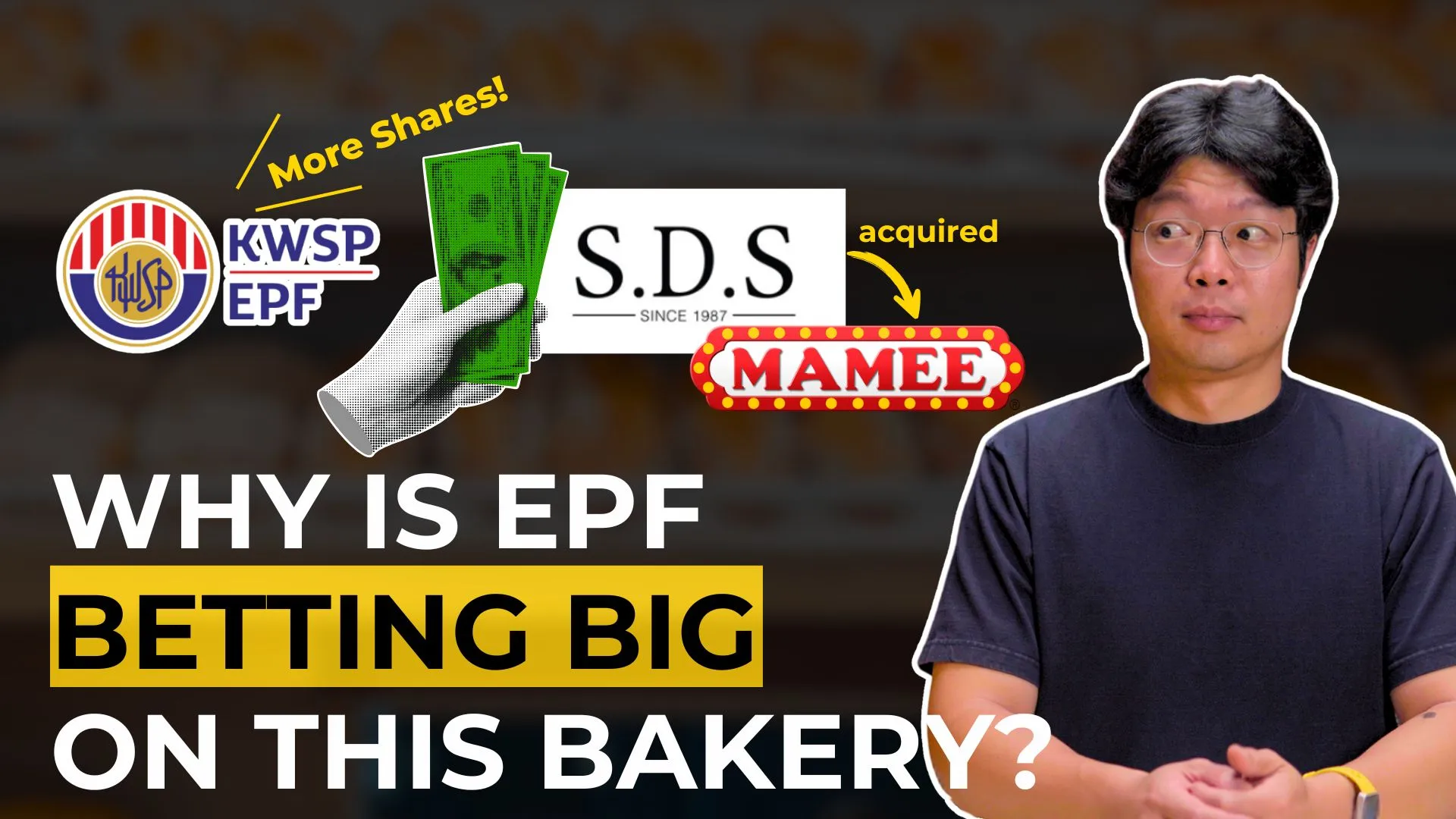
Back in 2019, Johor-based bakery business SDS Group Berhad went public at just 23 sen a share. Fast forward to today, and its stock has more than tripled. What’s even more interesting? The Employees Provident Fund (EPF) recently upped its stake from 3% to over 5%, officially becoming a substantial shareholder.
Now, EPF investing in public companies isn’t news by itself. But this one made people stop scrolling. Why? Because SDS isn’t a flashy tech unicorn or a trendy IPO. It’s bread. Cakes. Buns. Swiss rolls. Everyday items you find at petrol stations and convenience stores — the unglamorous staples of Malaysian life.
And yet, EPF, which manages over RM1 trillion, clearly sees something worth betting on. What do they see that the rest of us might be missing?
From Johor Bakery to Listed Company
Let’s start from the beginning. SDS began in 1987 with two brothers, Tan Kim Seng and Tan Kim Chai, baking in a small shop in Masai, Johor. No venture capital, no big machines, just determination and ovens. Over time, that tiny family bakery grew into SDS Group Berhad, now one of the most recognisable bakery names in southern Malaysia.
If you’ve lived in Johor Bahru, you’ve probably had an SDS birthday cake or grabbed buns from one of their cafés. They expanded quietly — over 30 outlets in Johor and around ten more in the Klang Valley. Affordable, local, family-friendly.
But here’s the twist: most Malaysians only see half the business.
While SDS cafés make up the visible, retail-friendly side, their real engine lies in wholesale.
Today, over 60% of SDS’s revenue comes from this segment, supplying breads, buns, and cakes across the nation under two major brands: Top Baker and Daily’s.
-
Top Baker serves traditional mom-and-pop sundry shops.
-
Daily’s supplies modern outlets like supermarkets, petrol marts, and convenience stores.
Behind the scenes, SDS has quietly built a nationwide logistics machine, with distribution depots across Peninsular Malaysia and a fleet of hundreds of delivery trucks that move before dawn. That means every time you grab a bun from a petrol station or a Swiss roll from a supermarket rack, there’s a good chance it came from SDS.
This scale, being able to produce and distribute in volume, gives SDS the kind of operational efficiency and margin control that smaller bakeries simply can’t match.
The Mamee Connection: A Smart Expansion
Just when people thought SDS was content with bread and buns, the company made a surprising move.
In August 2025, SDS announced it was acquiring the bakery division of Mamee-Double Decker. Yes, the same brand famous for Mamee Monster noodles and Double Decker snacks. For RM28 million, SDS is taking over Mamee’s Plentong bakery plant in Johor — including machinery, production lines, and the rights to produce London Roll and Tora Swiss rolls.
These nostalgic products are cheap, shelf-stable, and everywhere. The genius? SDS can now plug them straight into its existing wholesale network. Every truck delivering bread can now carry Swiss rolls too. It’s the same routes, but now with higher volume and better margins.
Better yet, Swiss rolls last longer than fresh bread. That opens the door to exports, a potential new chapter for a company that’s so far been Johor-centric.
SDS isn’t just baking anymore. They’re scaling nostalgia, and EPF seems to think that’s brilliant business.
Why EPF Is Buying Bread
So why would a trillion-ringgit institution buy into something as “boring” as buns?
Because boring can be beautiful — especially when the economy slows down.
More than 60% of SDS’s revenue comes from products sold through supermarkets, hypermarkets, petrol marts, and convenience stores. These are not luxury goods but everyday staples, bought by the very people who make up Malaysia’s mass market.
When times get tough, people don’t stop eating bread. They just skip the fancy cafés. Economists call this the “trade-down effect.” Instead of RM30 brunches, families opt for RM2 buns and RM5 cakes.
And the timing fits.
-
Global growth is slowing — the World Bank expects it to hover in the low 2% range in 2025, one of the weakest since 2008.
-
Malaysia’s economy is expected to moderate to around 4%, with exports softening and households feeling the pinch from high debt levels.
That’s when defensive, consumer-staple companies like SDS shine. Their demand doesn’t collapse. It stabilises or even grows.
And with the Mamee plant’s longer-shelf-life products, SDS can ride through tough times with even more resilience.
When you connect the dots of a slowing economy, steady demand, and scalable logistics, it’s clear why EPF is topping up on SDS. They’re not chasing hype. They’re chasing stability.
The Numbers Behind the Dough
Let’s talk returns.
Back in 2020, SDS made around RM192 million in revenue but only RM4 million in profit — margins of just 2%. Fast forward to 2025, and SDS is pulling in RM346 million in revenue and over RM33 million in profit. That’s an eight-fold jump in profit on less than double the sales.
Margins now sit near 10%, and here’s the kicker: they achieved this without piling on debt or opening dozens of new stores. Instead, SDS learned to optimise, to squeeze more value out of what they already had, whether it was their factories, distribution lines, or trucks.
That’s what high Return on Capital Employed (ROCE) looks like. A company turning every invested ringgit into meaningful returns. It’s the kind of metric big investors like EPF love.
And the cash flow backs it up.
SDS generated over RM50 million in operating cash flow in FY2025, not exactly pocket change. This financial discipline means SDS can weather cost spikes, invest when others hesitate, and still pay dividends.
In a market obsessed with hype, that’s a quiet kind of powerful.
The Bigger Picture: Boring Is the New Brilliant
So what’s the takeaway here?
SDS might not make headlines with futuristic tech or viral marketing, but they’ve built a business that thrives on consistency, efficiency, and everyday consumption.
They sell what Malaysians actually buy, and they do it profitably and sustainably. EPF’s latest move is just another vote of confidence in their favour.
When the economy cools, flashy fades quickly. Bread (both the edible and spendable type) stays.
SDS is proof that sometimes, the smartest investment isn’t the loudest — it’s the one that smells faintly of freshly baked buns.
Prefer to watch a video instead of reading this? Check it out here!
Disclaimer:
This is not investment advice. All content is for education and entertainment purposes only. Consult a financial adviser before making investment decisions. (And do your own research too, it definitely helps!)