Astro Lost FIFA. Is It Finally Over?
Astro was in 7 of 10 Malaysian homes and paid fat dividends for years. Then broadband, Netflix, cheap TV boxes and a lost FIFA deal gutted it. Here is how.
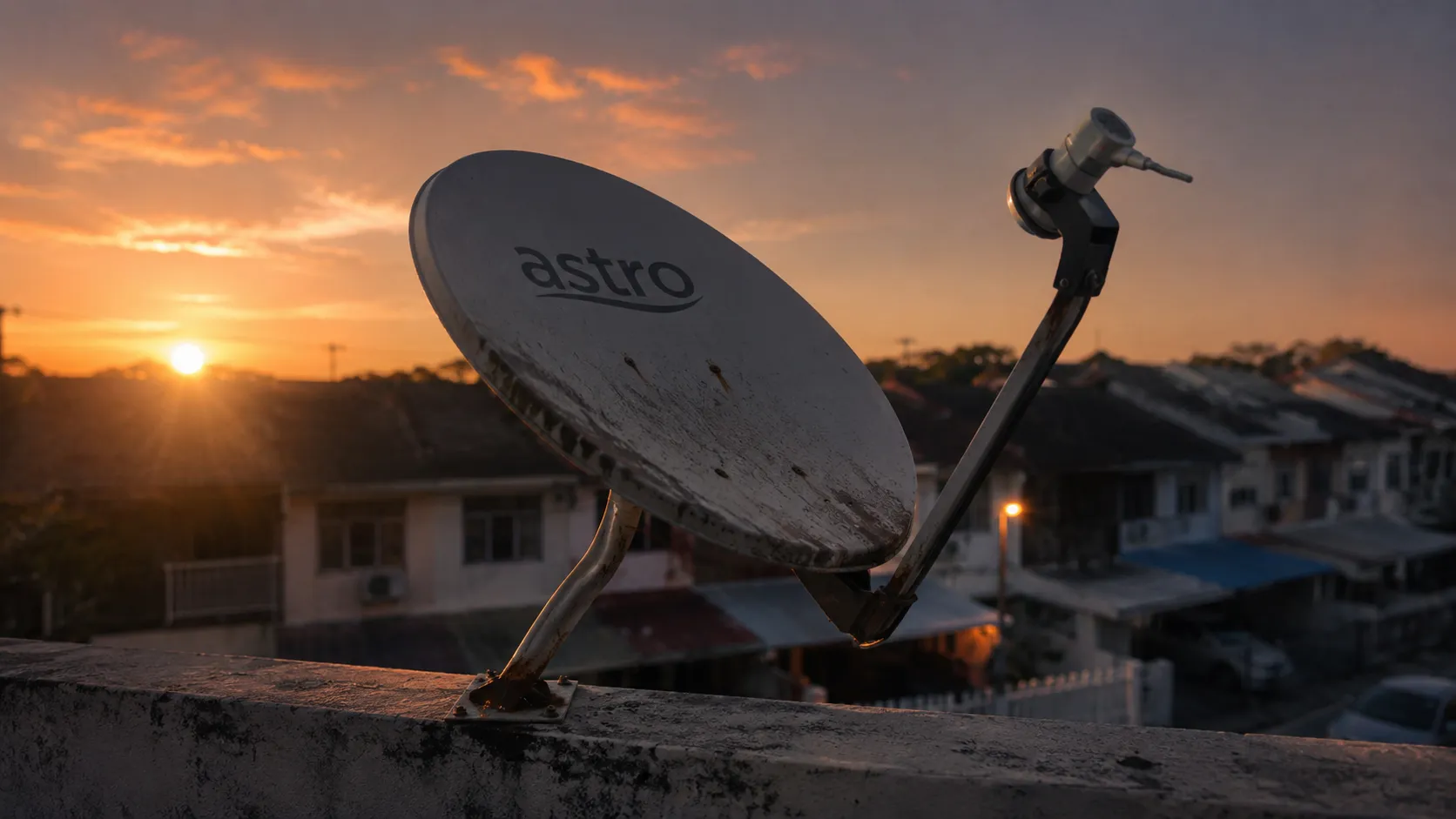
Out of every ten Malaysian homes, seven once had an Astro dish bolted to the wall. Today most of those dishes are still there, rusting quietly on the ledge, while nobody inside is actually watching. You probably have one too. When was the last time you switched it on?
For over 20 years Astro was untouchable. It was the only way to get pay-TV in the country, it ran the radio stations you grew up with, and it printed money from the bill your parents paid every single month. Then its share price slid from RM3.70 to 5 sen, and in 2026 it lost the FIFA World Cup to a free government channel. The strange part is that the very thing that made Astro untouchable for two decades, a government-protected monopoly, is what quietly finished it off.
1. The 20-year monopoly that built a giant

Start with the deal that made everything else possible. Astro was built by the late Ananda Krishnan, one of the richest men Malaysia has ever produced, who died in November 2024 at the age of 86. He already had money in oil, gaming and telecoms, and he was close enough to Tan Sri Tony Fernandes that there is still a rumour AirAsia’s AK flight code is a nod to his initials.
In the mid-1990s, under Mahathir, Malaysia wanted to put its own satellites into space. Krishnan’s group launched the MEASAT satellites in 1996, and Astro went live that September with 22 TV channels and a stack of radio stations. The name itself spells out the ambition: All-Asian Satellite Television and Radio Operator. In return for building all that, the government handed Astro a 20-year exclusive licence to run satellite pay-TV. Nobody else could legally do it.

Malaysia has a handful of monopolies like this. Genting holds the only casino licence in the country. TNB is the only company that can sell you electricity in Peninsular Malaysia, which is why generators like YTL Power and Malakoff have to sell their electricity to TNB rather than to you. Astro sat in exactly that position for broadcasting, and for a long time it felt permanent.
2. The golden era: billions from your monthly bill
The growth was ridiculous. Within three years Astro had passed 300,000 households. By mid-2001 it was at 600,000 subscribers, and by 2016 it was in roughly 71% of Malaysian homes, around 5.7 million TVs. It became the country’s biggest content producer. Every Chinese New Year came with an Astro song. Getting a job at Astro was something people were genuinely proud of.
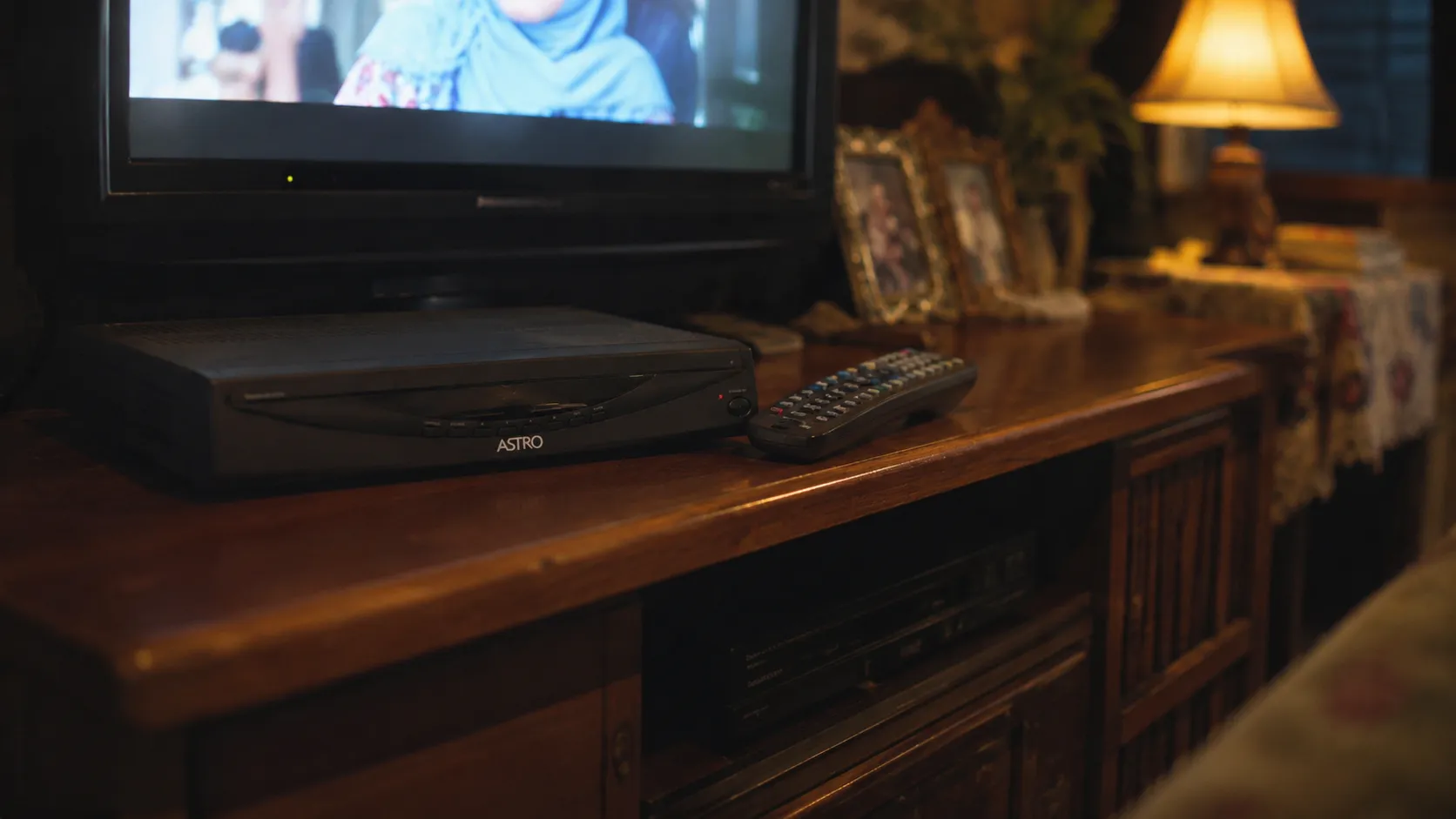
The money came from a simple, beautiful model. Astro ran on subscriptions, so you paid every month, or every year, for a package. That is a cash-flow business, and one with no competitor throws off huge, predictable profits. For years Astro was a stock-market darling that paid out hundreds of millions of ringgit in dividends annually, comfortably beating a fixed deposit. Owning the share and collecting the dividend was a genuinely smart move.
Krishnan understood capital markets better than almost anyone. He listed Astro, took it private for around RM8 billion to restructure it, then relisted it in 2012 at a far higher valuation, all while collecting dividends the whole way through. The company made its owners a fortune. The trap was buried inside that success. When you make that much money without anyone forcing you to fight for it, you get comfortable. A monopoly does not have to innovate. It just has to keep the lights on and send the bill.
3. How the internet quietly changed everything
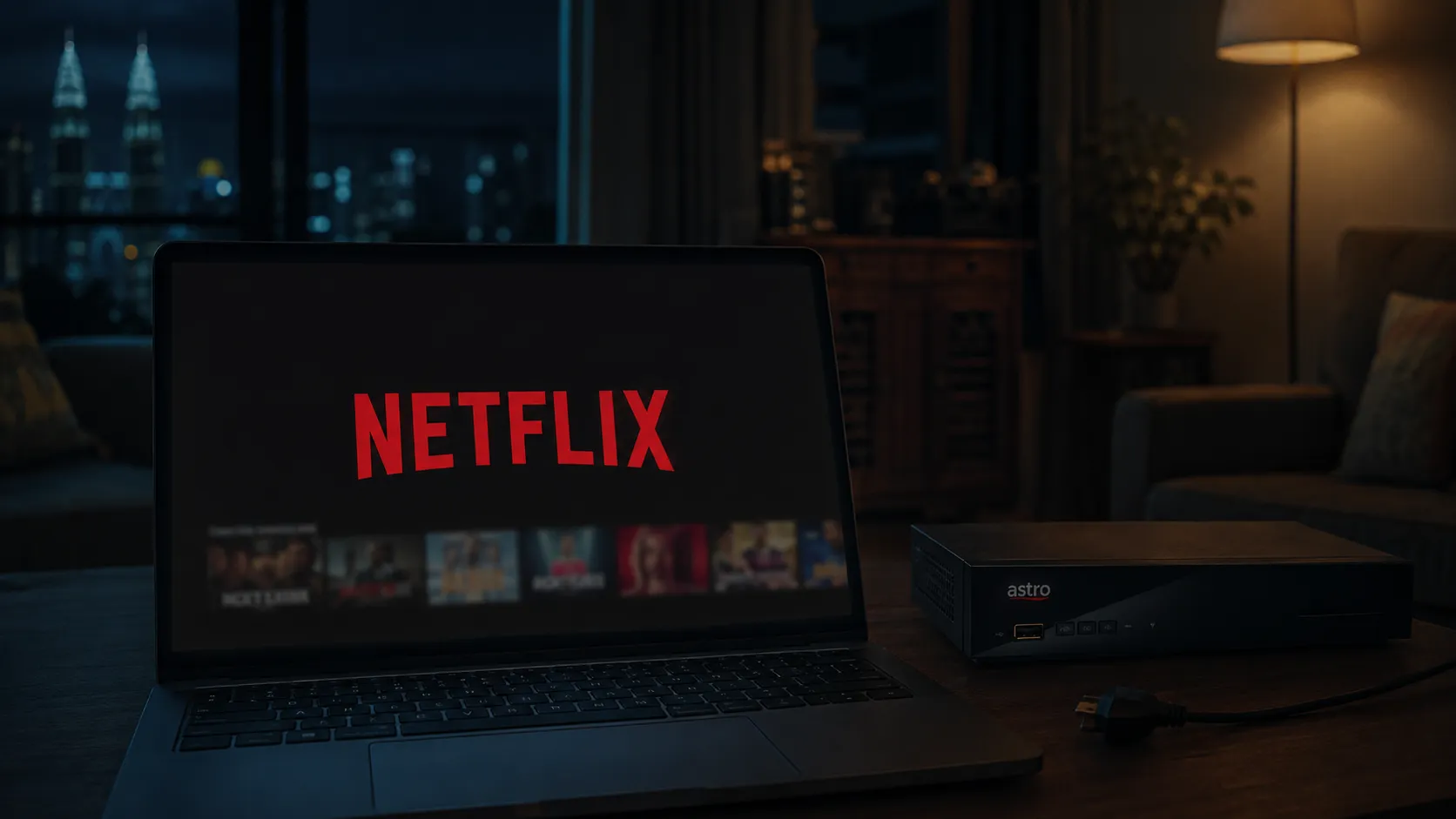
Then the ground shifted, slowly at first. Home broadband got fast enough to stream video properly. Netflix arrived and suddenly Astro had a real competitor for the first time in its life, one it could not outlaw. Why pay for a fixed bundle of channels when you could pick what you wanted, on your laptop, whenever you liked?
The bigger blow was cruder. Around 10 to 15 years ago, the TV box appeared. You paid RM300 to RM400 once, and it claimed to give you every channel Astro had, including all the football, free for life. No monthly bill, no contract. For a lot of families, that was the moment they quietly stopped subscribing.
These boxes were illegal, and the government did say so, because the broadcast rights genuinely belonged to Astro. But rights only mean something if you can enforce them, and you cannot police millions of living rooms the way you police a satellite signal. Astro could control the airwaves, but nobody could control the internet. Enforcement landed mainly on commercial spaces, so a mamak showing football on a pirated box could still get caught, which is why Astro clung on in shops and cafes even as homes emptied out. In the living room, the war was already lost.
4. Why advertisers stopped paying Astro
Losing viewers hurt, but the deeper wound was what those viewers had been worth to advertisers.
Old-school TV advertising was expensive on every front. You paid a creative agency for the idea, then a production crew to shoot it, back when a decent microphone cost RM2,000 instead of RM400. Then you paid again for the airtime, and airtime was priced by how many eyeballs were watching. A 2pm slot during a telenovela was cheap because the audience was small. An 8pm to 10pm drama slot, when working parents were finally home, cost a fortune, sometimes RM30,000 to RM100,000 for a single spot, sold in packages of twenty airings. And during football, when even people who do not follow the game tune in, Astro could name its price. It had the eyeballs and no competitor, so it charged accordingly.
That whole model leaked away. A brand can now put a mid-roll into a YouTube video for maybe RM5,000 to RM50,000, and unlike a three-minute TV spot that vanishes the moment it airs, that placement lives online forever. So the marketing budgets moved. They flowed to YouTubers and Instagrammers, which is exactly why those creators started earning real money. Radio, once glamorous enough that being a DJ was a dream job, faded the same way. The audience left, and the ad money followed it out the door.
5. The numbers: from RM3.70 to 5 sen
The numbers are brutal. Astro’s revenue slid from over RM4 billion to under RM3 billion, and annual profit that once topped RM500 million shrank to a fraction of that, roughly halving year after year.
The share price is where it stings most. Astro listed in 2012 at around RM3 and peaked at RM3.70 in June 2014, not long after. From there it just kept sliding, year after year, and the fall got steeper as each pillar of the business gave way. In May 2026 it touched an all-time low of 5 sen, and it now trades at around 6 sen. If you had put money in near the top, you would be sitting on well over a 95% loss. The company that was famous for fat, reliable dividends now pays nothing at all.
The lesson for anyone who owns shares is older than Astro. A business protected from competition can look like a safe, generous dividend payer right up until the world changes and that protection turns out to be worth nothing. A high yield from a company that has stopped adapting is often a warning, not a reward. If you do buy individual companies rather than just an index fund, it pays to use a proper broker and read the accounts yourself. A beginner can start with a regulated platform like Webull, then judge whether a business is actually evolving or just coasting on an old advantage. (Some links here are affiliate links; Finlit may earn a commission at no extra cost to you.)
6. Losing FIFA, and why football is now free

For its last few years, Astro leaned hard on one thing: sport. The rights to broadcast the FIFA World Cup and the English Premier League were the main reason a lot of holdouts kept paying. When your monopoly is stripped down to that, it takes only one bad season to expose you.
The 20-year run ended, and Astro was outbid. In May 2026, RTM and Unifi TV took the 2026 FIFA World Cup rights, with the government putting up RM24 million for the deal. Astro said it made a fair and competitive bid but chose not to go higher, blaming rising rights fees and piracy. So for the first time in living memory, Malaysians get the World Cup free, on free-to-air, in offices and mamak stalls and living rooms everywhere, with no religious grey area about showing it in public.
There is a good chance FIFA wanted this outcome. Every sports body now lives and dies on eyeballs, because eyeballs are what attract sponsors. A sponsor paying to put its name on a shirt wants the widest possible audience, and a free national broadcaster reaches far more people than a shrinking pay-TV base ever could. FIFA reportedly wanted around USD 50 million and settled for RM24 million, which tells you the value of exclusive rights is falling in a world where you can catch the highlights on YouTube anyway. Look at Netflix chasing WWE, Formula 1 and NFL: sport is migrating to whoever can put it in front of the most screens. Astro was built for the opposite era, when it was the only screen that mattered.
7. The real lesson: “this is how we’ve always done it”
The uncomfortable part is that Astro almost certainly saw this coming. Anyone watching broadband speeds climb and Netflix spread could see where it was heading. It sat on a mountain of talent, a huge content library and years of warning. It could have become a serious digital player or a talent agency for the creators who were about to eat its lunch. It did neither.
Instead it kept paying out most of its earnings as dividends rather than reinvesting, and carried on as it always had. That is the quiet danger of a monopoly. When everyone assumes the good times are permanent, the whole organisation settles into “this is how we do things,” and by the time the threat is undeniable, turning a company that size around is like steering a tanker. Pivot too late with too many people set in the old way, and you cannot move fast enough. A small company can change direction. One that size cannot, at least not quickly.
Astro is not quite dead. Its Chinese radio and content still hold a real audience, especially among older and more rural listeners. But its most valuable revenue line is gone, and it never built the next one while it had the money and the time. Whether it still exists in a recognisable form a few years from now is a genuinely open question.
What to actually do with this
- Treat any “safe” monopoly stock with suspicion. Ask whether its advantage is protected by law or by genuinely staying ahead, because legal protection eventually expires.
- Read a high dividend as a question, not an answer. A company handing out most of its profit may be one that has run out of good ways to reinvest.
- Watch how a business responds to a new technology, not just its current numbers. The ones that say “this is how we’ve always done it” are the ones to worry about.
- If you own individual shares, actually read the annual report and follow revenue trends over several years, rather than trusting a familiar brand name.
- Cancel the subscriptions you no longer use. Plenty of Malaysians are still paying for a dish they have not switched on in years.
Astro’s collapse was not really about losing one football tournament. It was about a company that was protected so well, for so long, that it forgot how to compete, and then met an internet it could not out-muscle or outlaw. The monopoly that built it was the same thing that made it too comfortable to save itself. That is the part worth remembering the next time something looks too dominant to ever fail.