How to Get Out of Credit Card Debt
The average Malaysian owes almost RM12,000 on credit cards. A licensed financial planner explains how to actually pay it off, and what quietly keeps you stuck.
A credit card lets you pull income from your future so you can enjoy things today. The problem is simple: keep pulling, and when the future arrives, the money is not there. The average Malaysian now owes close to RM12,000 on their cards, and most people have no idea how deep they are until the balance stops shrinking.
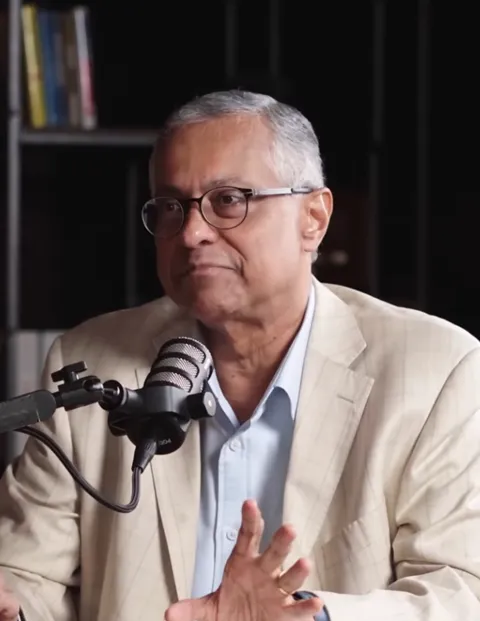
We sat down with Rajen, a licensed financial planner who has trained debt counsellors at Malaysia’s AKPK and written about personal finance in the New Straits Times for over eleven years. He has worked with Malaysians at every income level, and the thing he keeps coming back to is uncomfortable: earning more does not automatically get you out of debt. Here is how he thinks about getting out, and staying out.
1. The real reason we are in debt
Ask why so many Malaysians are stuck, and the easy answer is bad spending habits. Rajen’s answer, after decades of watching it up close, is different. Most of the time, we simply do not earn enough.
Look at it the way financial planners do, through two statements rather than an accountant’s three. There is your net worth, what you own minus what you owe on any given day. And there is your cash flow, which is refreshingly simple: money coming in, money going out. When the money coming in is too thin, debt is what fills the gap. That is why the boss pulling RM80,000 a month can have a weaker net worth than a staff member on RM4,000. Absolute income matters far less than the ratios you run.
The squeeze is real, and it is not in your head. Roti canai that cost 50 sen a generation ago is now RM2 to RM2.50, a fivefold jump. A terrace house in PJ that went for RM170,000 in the 1980s is a million ringgit today. Prices climbed five and tenfold. Salaries did not follow. So before you blame yourself for the balance on your card, understand that the ground shifted under everyone.
That is the honest backdrop. It is also not an excuse to stay stuck, because the way out is the same regardless of what put you there.
2. Save a little, even while you are in debt
Everyone has heard “pay yourself first.” Almost nobody does it consistently. Rajen’s fix is to make the number so small it is impossible to argue with. Start at 1% of whatever comes in. On RM4,000 that is RM40. On RM80,000 it is RM800. The point is not the amount, it is building the reflex, because money saved acts as a magnet for money earned.
This sounds backwards when you owe RM20,000. Why save when every ringgit could be killing the debt? Because of what happens to your head. A study in the UK once tracked two groups of people in debt. One group just paid and paid. The other paid a little less but also set aside a small amount each month. The savers held on longer and stayed calmer, and that stability is what let them finish. A person with nothing behind them cracks, tells themselves “one more month on the card won’t hurt,” and the whole plan unravels.
So build a small emergency buffer alongside your repayments, your first cushion against life’s surprises. Keep it somewhere you will not casually raid. The BSN SSP savings scheme is one option a lot of Malaysians use for exactly this “save it and forget it” money, with the bonus of a monthly prize draw on top of the profit rate. The mechanism matters less than the habit: the less you see the money, the less likely you are to spend it.
3. Snowball or avalanche: pick the one you will finish
Say you have RM20,000 spread across four cards: RM2,000, RM4,000, RM6,000 and RM8,000. First, pick one card that still has room and use only that one for daily life, so you are not paralysed. Then write everything down: each balance, its minimum payment, its due date. Now tighten your belt hard enough to produce a surplus, say RM700 a month, and choose your method.

The avalanche, or high to low, means working out the real interest rate on each debt and attacking the most expensive one first. It is mathematically the cheapest route, and it works across all your debts, not just cards.
The snowball, small to big, means ignoring interest and hitting the smallest balance first. Meet every minimum, then pour the whole RM700 onto that RM2,000 card. It drops to RM1,300 the next month, RM650 the month after, gone by the third. Then you take the money that card used to swallow, add it to your RM700, and roll it all onto the RM4,000 card. Each cleared card frees up more firepower for the next.
The avalanche saves you money. The snowball is the one most people actually finish. When a card you have juggled for years disappears in three months, the lift is enormous, and that feeling is what carries you through the long grind. The extra RM50 in interest is a cheap price for not quitting. If you want to read more, this is what American planners call the debt snowball, and there is plenty written on it.
If writing all this out by hand feels like a chore, that is often where people stall before they even start. Our own money assistant has a free walkthrough for exactly this at MoneyMama’s getting-out-of-debt guide, which maps your cards and builds the payoff order for you.
4. Pay early, and watch the consolidation trap
Here is a line that makes people flinch: do not pay your debts on time. Pay them early. Paying early builds creditor trust, and trust is worth a lot when you owe money. It is a small habit that quietly works in your favour.
Now, the tempting shortcut. Balance transfers and debt consolidation loans arrive by email and phone call precisely when you are lying awake doing mental arithmetic. They can genuinely help. A personal loan at 7% to 14% is cheaper than a card at 18% to 20%. But there is a trap, and it has ended more people worse off than where they began.
You take a RM20,000 loan, the cash lands in your account, and you pay off all four cards. Good. If you stop there, you now hold that loan plus four pristine cards with zero balances and a brain that has not changed. A few months later the appetite returns, the cards fill up again, and your position is twice as bad. Consolidation only works if you cancel or freeze the cleared cards. No exceptions.

Some people mean that last part literally, dropping the card in a tub of water and leaving it in the freezer, so a late-night impulse has to thaw before it can spend. Whatever the method, the card has to stop being usable.
One more thing on those “cheap” loans. When a bank quotes 3.5%, that is usually a flat rate. The real effective rate is roughly double, so about 7% to 8%. That is still cheaper than a card, so the move can be right. Just make sure you are comparing the true effective rate against the card, not the flattering number on the brochure.
5. Buy now pay later is the more dangerous cousin
Credit card debt at least requires a credit check to get started. Buy now pay later does not, which is exactly why it is spreading fastest among people who can least afford it, and why the total owed on these schemes has ballooned.
The percentages are uglier than they look. A credit card late fee might be RM50 on a large balance. A BNPL late fee might be just RM10, but on a RM50 purchase that is 20% in one hit. Small base, small-sounding fee, brutal ratio.
It does have one saving grace. Miss a payment on BNPL and the whole facility usually freezes: you cannot buy anything else until you clear what you owe, late fees included. A credit card is the opposite. You can owe RM2,000, pay RM200, and keep charging more, and it is that revolving feature that does the real long-term damage. So BNPL forces a discipline that credit cards let you avoid. Used without care, though, it is still the more dangerous of the two, and banning it outright would not be the worst idea.
6. Life after you are debt-free
Once the last balance clears, celebrate, and pay cash while you do it. Then decide which kind of person you are.
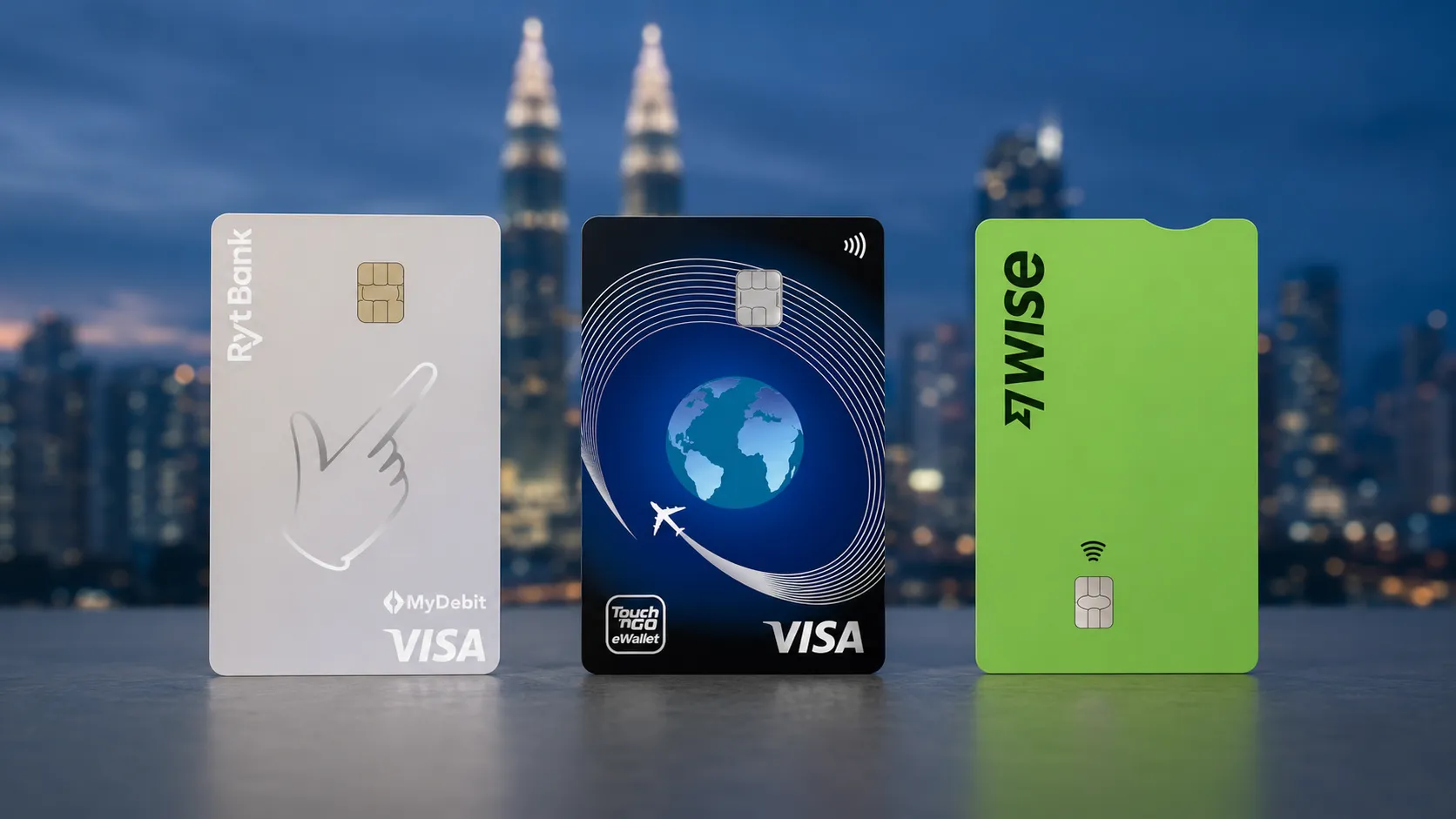
If you have genuinely learned the lesson, keep one card. Two only if you run a business and want to separate personal from business claims, or if you travel and want one Visa and one Mastercard so a card is never refused overseas. Chasing fourteen cards to game cashback and points is a real strategy for a rare few, but for most people it just burns mental bandwidth you could spend earning more.
If you do not trust yourself yet, cut the cards entirely and become your own banker with a debit card. Pick one account, load it with a fixed float, say RM12,000, and spend only from that. As it drops to RM8,000 through the month, you top it back up on payday. You still get the convenience, except now you earn interest on the balance instead of paying it. The one thing a debit card loses is purchase protection: credit cards often bundle travel cover and let you dispute a charge for goods that never arrive, and that is a genuine edge worth keeping in mind.
There is one simple test of whether you are using cards for convenience or for credit. Add up every sen you paid in interest and late charges over the past year. If it is zero, cards are working for you. If it is not, get out as fast as you can.
What to actually do with this
A few concrete moves come out of all this:
- List every card with its balance, minimum payment and due date, then move all daily spending onto just one of them so you can attack the rest.
- Cut hard enough to free up a monthly surplus, then pick snowball or avalanche and throw the whole surplus at one card at a time.
- Save a small buffer at the same time, even 1% of income, so a bad month does not send you back to the cards.
- If you consolidate with a personal loan, cancel or freeze the cleared cards the same day, and compare the effective rate, not the flat rate.
- Treat buy now pay later with the same caution as a card, and once you are clear, drop to one or two cards or switch to a loaded debit card.
None of this is really a maths problem. The numbers are simple. What keeps people in debt is the appetite that fills the cards back up, and the exhaustion that makes “one more month” feel reasonable. Rewire the first, protect yourself against the second with a small buffer, and the payoff plan mostly runs itself. Earning more helps, but discipline is what actually gets you out.
If you would rather hear the full conversation, including Rajen’s own two brushes with credit card debt and how he climbed out, here it is.

Some links here, including MoneyMama and BSN, are our own or affiliate links; Finlit may earn a commission at no extra cost to you.