Why Is The Malaysian Ringgit Currency So Weak?
Why is Malaysia's Ringgit currency weak? Understand the factors behind this trend, from Malaysia's managed float system to global currency shifts.
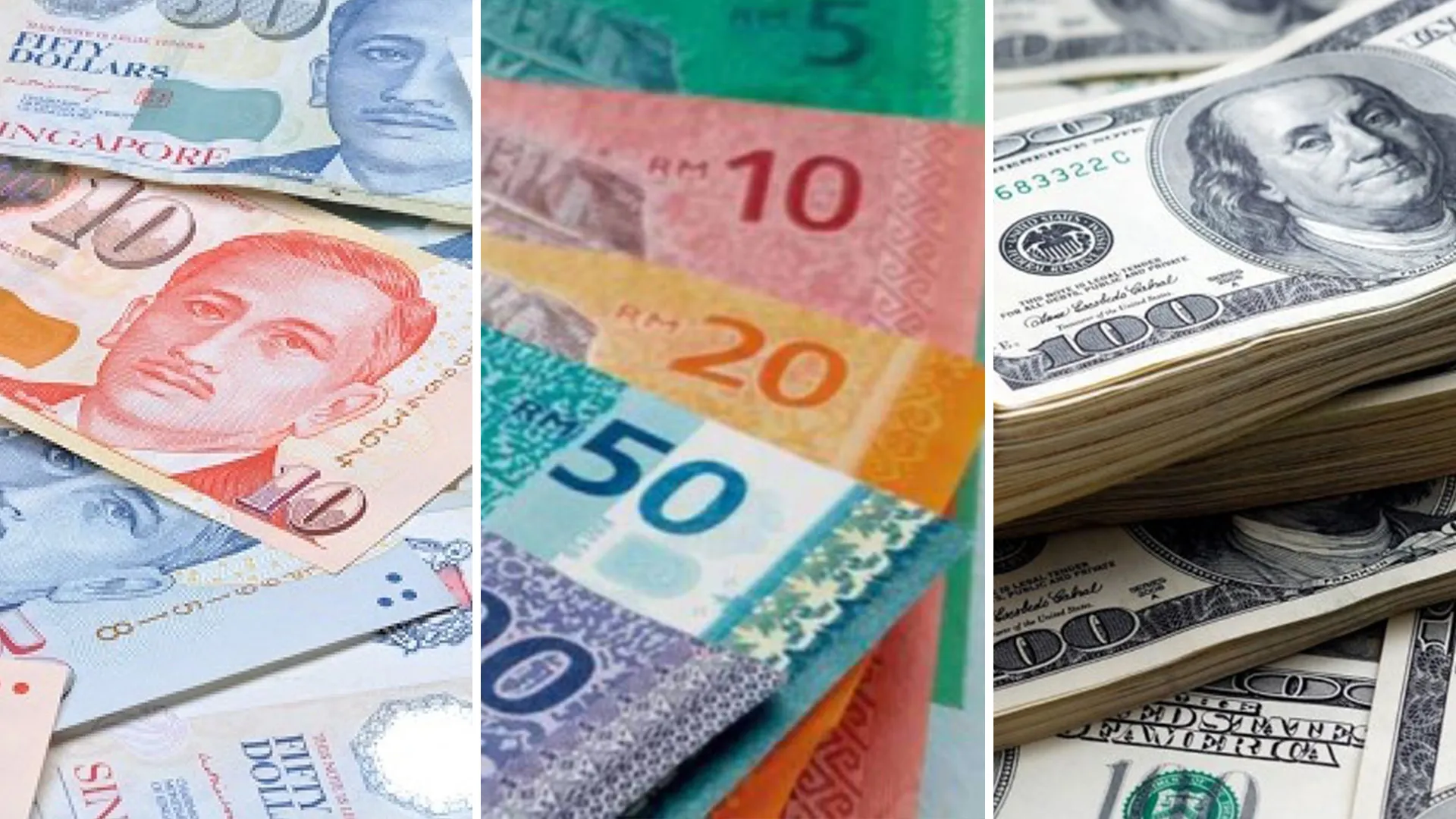
Year after year, we always hear Malaysians complain about one thing: The Ringgit weakening. We’re constantly comparing the exchange rate between MYR and SGD, MYR and USD or even MYR and THB. So, let’s get to the bottom of it and try to understand why the Ringgit keeps weakening.
Understanding How Malaysia Manages Its Currency
Before we address why the Malaysian Ringgit is becoming weaker, first, we need to understand how Malaysia manages its currency.
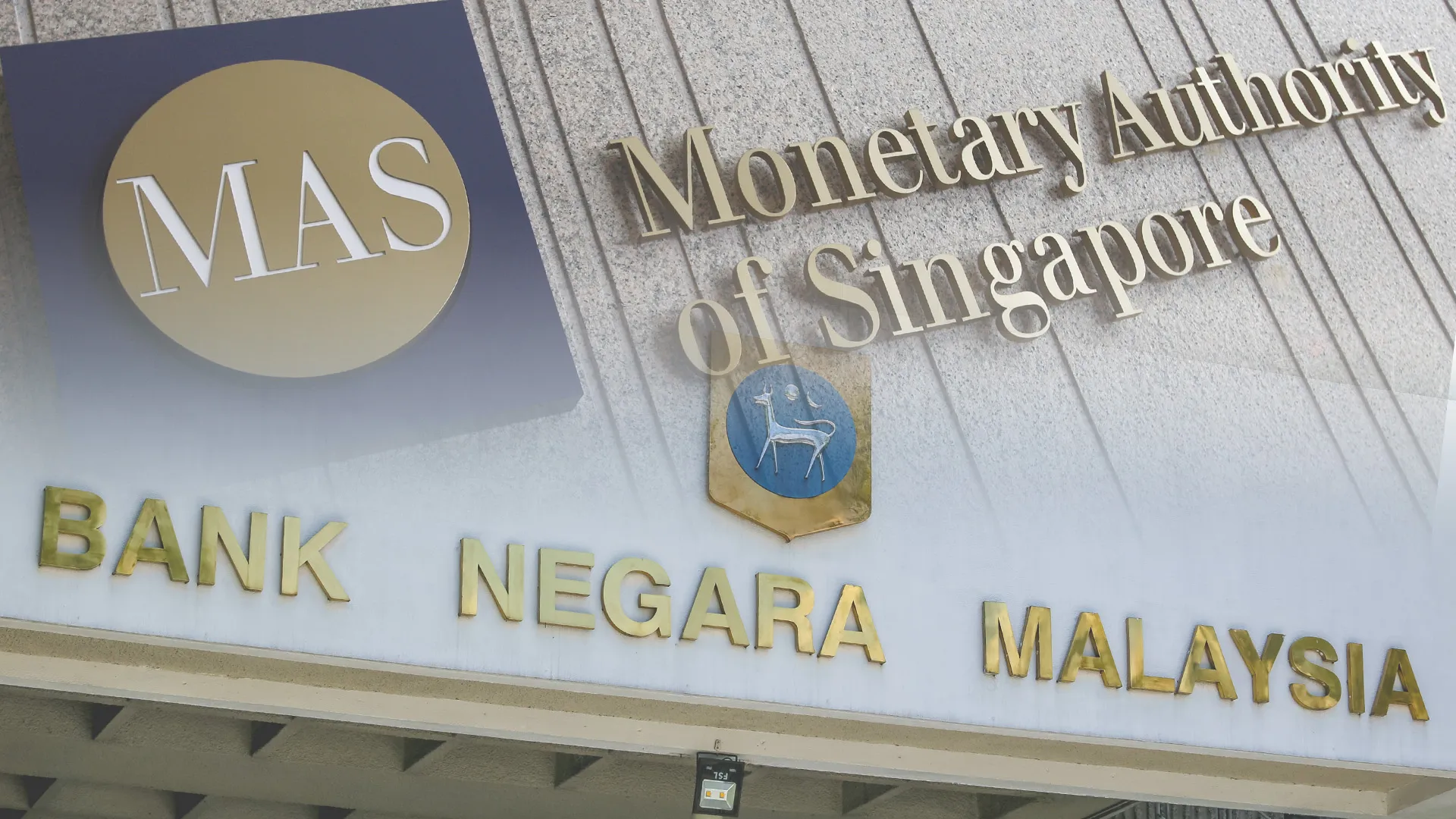
The management of the Malaysian Ringgit (MYR) rests in the hands of Bank Negara Malaysia (BNM), our country’s central bank. When it comes to managing our currency, BNM has taken the approach of adjusting our interest rates or Overnight Policy Rates (OPR). This currency policy is known as a managed float system against a trade-weighted basket of currencies.
So what is a managed float system? First, we need to understand what a float system is.
In a float system, the value of a currency is allowed to “float” or change freely based on supply and demand in the foreign exchange market (FOREX). For example, if currency X offers a high-interest rate or is in a growing economy, investors will be attracted to it and buy more of it, hence, making currency X appreciate. On the other hand, investors may also sell currency X if it has a low-interest rate or is in a volatile economy, hence, making currency X depreciate. So, a float system is entirely dependent on the will of the market.
When it comes to a managed float system (BNM’s approach), it applies both the float system and the additional adjustment of interest rates/OPR. So, instead of allowing the MYR to be completely at the mercy of market sentiment, BNM will adjust the OPR to control the attractiveness of the MYR. Then, following the same theory as the float system, investors will either buy or sell based on how high or low our interest rate/OPR is.
To summarise it in one sentence, a managed float system is like a halfway point between a completely free market and a tightly controlled one. Because of this, the value of the Ringgit can fluctuate in a “predictable” manner according to changes in the market.
MYR vs USD: Is the MYR Currency Just Not Attractive?

Now that BNM has hiked OPR to 3.00%, why hasn’t our Ringgit gone up as well? Is the MYR just not attractive to investors?
Well, not exactly. Other global currencies are also depreciating, so it’s not just us. This is because the USD is strengthening as a currency. After the US resolved its debt ceiling crisis last month, investors naturally turned back to the USD as a safe haven to put their money in. On top of that, the US Federal Reserve (Feds) has also been raising its interest rates over the past few months making the USD even more attractive to investors.
One thing that needs to be understood about FOREX investing is that investors will usually convert “lower-valued” currencies into ones with “higher value”. For example, currently, we’re seeing investors converting their MYR into USD because of how attractive it is (as explained above). In a way, when this happens, money is “going out” of Malaysia and “coming in” into the US, hence making the MYR depreciate against the strengthening USD.
Now we know why 1 USD = RM4.65. But what about 1 SGD = RM3.45?
MYR vs SGD: Why is SGD Currency Doing So Well Despite USD Strengthening?
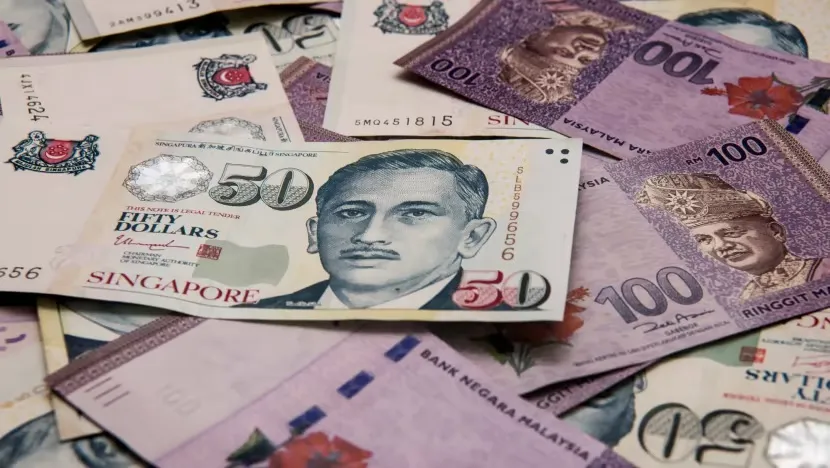
Earlier we mentioned that other global currencies have also been depreciating against the back of a strengthening USD; but for some reason, the SGD is doing just fine. In fact, they’re doing great! Why is that?
To answer that question, we need to understand how Singapore manages its currency. Singapore’s central bank, The Monetary Authority of Singapore (MAS) has also adopted a version of the managed float system; but instead of adjusting interest rates/OPR (like how BNM does it), MAS employs an exchange-rate-centred monetary policy, whereby it manages the value of the SGD within a specified range by actively buying and selling its currency and foreign reserves.
For example, if the SGD falls on the lower end of its range—becoming too cheap—MAS would use its foreign reserves to buy back SGD, driving its value back up within the range. The converse happens when the SGD is at the higher end of the range.
This strategy enables Singapore to maintain the “price” of the SGD within a predetermined range, effectively controlling the exchange rate without significantly impacting its attractiveness to investors.
This difference between BNM’s and MAS’s monetary policies can lead to diverse outcomes when the USD strengthens. For instance, the SGD might not depreciate as much because MAS can adjust its policy to stabilise the SGD, whereas the MYR could depreciate more due to BNM’s policy of allowing it to float more freely. This explains why the SGD didn’t depreciate as much as the MYR when the USD strengthened recently.
Why Can’t BNM Adopt MAS’s Monetary Policy?
Well, here’s the thing, all countries have different monetary policies to suit what the country needs. In Malaysia, our government decided to set in place the managed float system against a trade-weighted basket of currencies following the economic turmoil of the Asian Financial Crisis in 1997.
Back then in 1998, the MYR had been freely trading in the turbulent seas of international foreign exchange markets. However, the storm of the 1997 Asian Financial Crisis was brewing on the horizon and Malaysia found itself amidst a catastrophic economic crisis, posing to sink our currency.
In response to this, Malaysia chose to transition from a floating policy to a more rigid exchange-rate policy. Rather than allowing the MYR to fluctuate according to a basket of different currencies within a certain range (like MAS’s current monetary policy), the decision was made to lock onto one currency at a fixed rate. This strategy is known as pegging.
So, on the 1st of September 1998, Malaysia pegged the MYR to the US dollar at a fixed rate of 3.80 MYR/USD.
Freed from the unpredictability of the forex market, MYR’s value remained steadfast during the tumultuous economic conditions of the financial crisis. This strategy ushered in an era of stability in the midst of economic chaos.
After the storm had passed, on July 21, 2005, the peg was officially removed. Since then, the Ringgit has been operating under a managed float system against a trade-weighted selection of currencies.
Why Did Malaysia Unpeg Its MYR Currency From USD?
The short answer is that it was to prevent the country from running out of money.
We have to remember that in order to maintain the rate of a currency against a target (pegging), the government has to keep buying and selling their currency or foreign reserves to push the rate up or down accordingly to maintain it within the fixed range.
But what happens when a country’s currency falls on the lower end of that range and they would need to sell off all of their foreign reserves? What happens if a country runs out of money?
Thankfully, this hasn’t happened to Malaysia because of our decision to unpeg our MYR from USD. But the same cannot be said for Hong Kong that’s facing the threat of a broken peg and potential financial crisis.
This just goes to show that pegging a currency, while a potentially effective short-term measure in times of crisis, can lead to problems down the line if not reconsidered when circumstances change.
How Should Malaysians Feel About The Falling Ringgit?
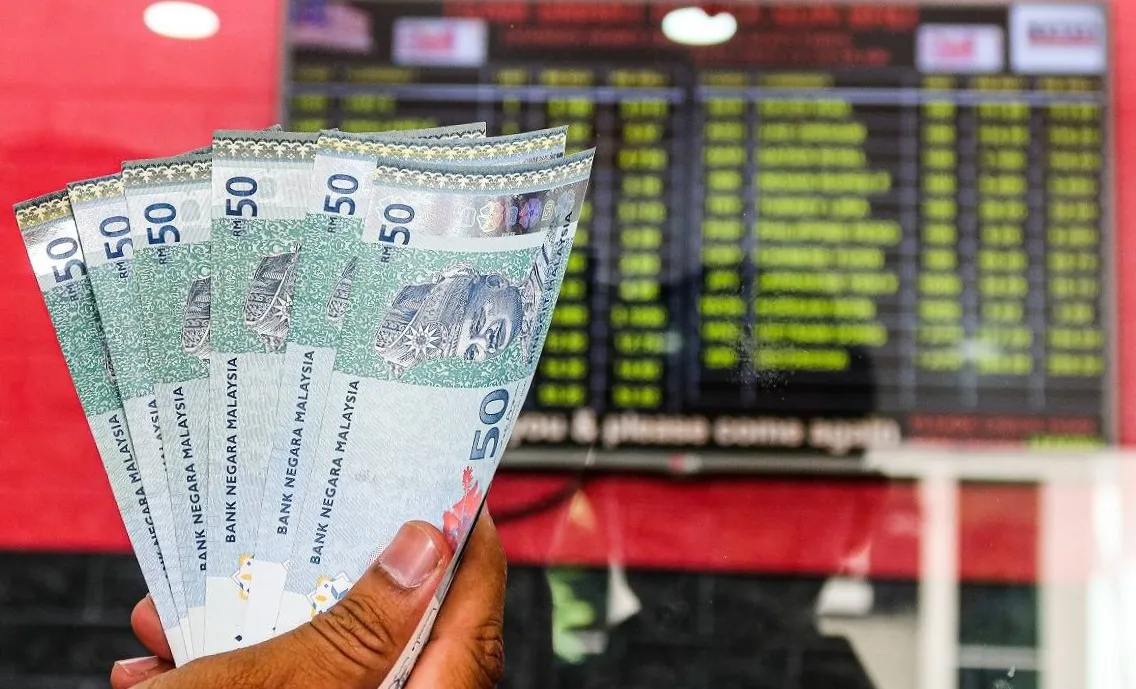
It’s understandable and valid that Malaysians feel angered and worried about the weakening Ringgit. But we need to keep in mind that there is a larger picture than the exchange rates we see on the money changer TV screen.
The managed float system that BNM has adopted is a strategy that provides us with the flexibility to navigate the rough seas of global economics while protecting the treasure of our foreign exchange reserves. Because at the end of the day, we don’t want to end up like Hong Kong, now do we?
Let’s also not forget how by maintaining our monetary policy, our country’s economic fundamentals and investment climate will be given the chance to thrive. Just this year alone, Malaysia has become a beacon, attracting investments from the economic giants of China and Japan. Just recently, we even attracted RM14.6 billion worth of investments from Texas Instruments.
Although these investments may not immediately bolster the Ringgit, they are building the fundamental structure for robust economic growth, creating jobs, and driving technological advancements.
So, as Malaysians, we have a role to play. We must remain patient, stay informed, and when the time comes, vote with the best interest of our country in mind. We may not see the fruits of our efforts within a few weeks, months or even years, but have faith and trust that we’re nurturing the seeds of a prosperous future for us and our kids a decade from now.
Did you know that besides the current economic downfall that we’re facing now, we might see another financial crisis happen soon? Find out what this crisis is about here.