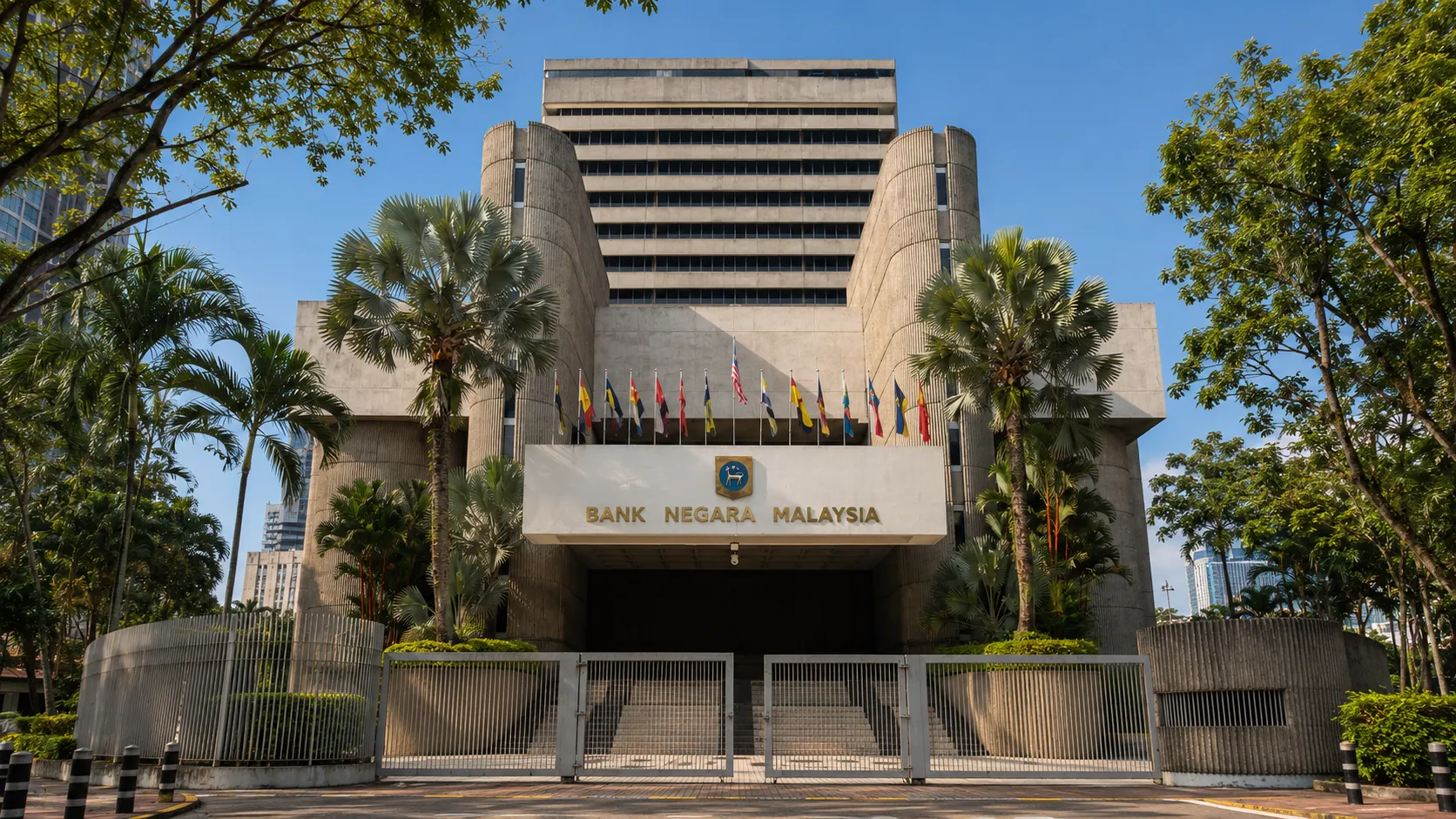
SUM Technology IPO: what the hype missed
SUM Technology opened 43% up and 110 people fought over every share. How the clean room business actually earns its money, and the risks buyers skipped.
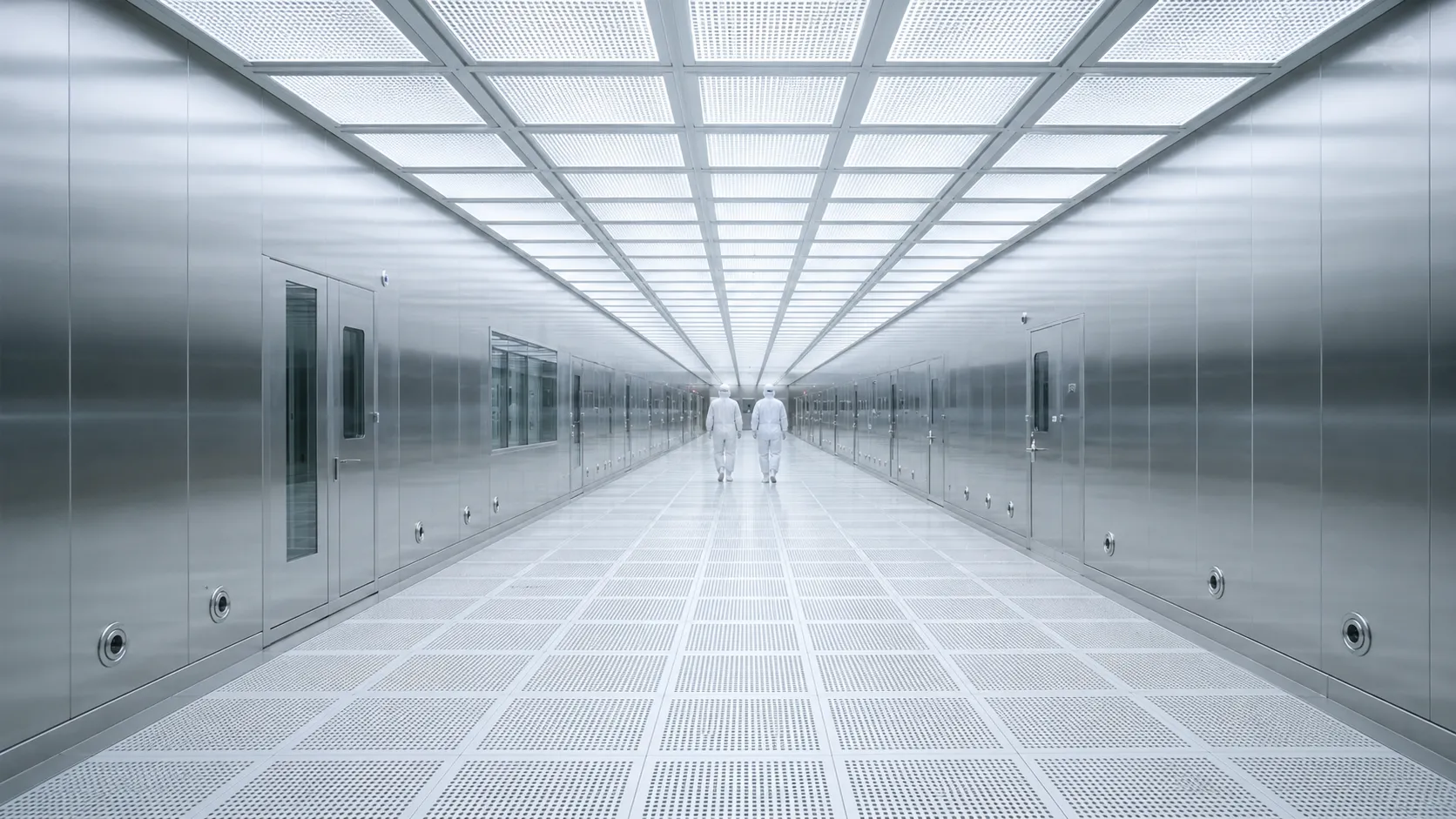
There is a room in Malaysia you are not allowed to breathe in. To go inside you put on a full bodysuit, mask, gloves and boots, because skin flakes, hair and the dust coming off your clothes right now can ruin equipment worth millions of ringgit.
No windows, no fresh air, and the air inside gets filtered and recirculated hundreds of times an hour. Without rooms like it, the chip in your phone does not exist. On 18 June 2026, the Malaysian company that builds them listed on Bursa Malaysia’s ACE Market. Nearly 20,000 applications came in for a small pool of shares. Sum Technology priced its IPO at 28 sen, opened at 40 sen, about 43% up before most people had lunch, and closed the first day at 52.5 sen, 87.5% above the offer price. The public portion was oversubscribed 110.54 times. That works out at roughly 110 applicants for every share available.
Most of them saw the words semiconductor, data centre and AI. The business underneath is a contractor with thin margins and about seven months of confirmed work on the books.
1. What a clean room actually is
A microchip is smaller than a strand of hair and carries thousands of circuits etched in patterns measured in nanometres. One particle of dust landing on it during manufacturing ruins it. So chips are made inside sealed rooms with the contamination stripped out of the air.
The ISO 14644-1 standard grades cleanliness from ISO Class 9 (a room with decent filters) down to ISO Class 1. A hospital operating theatre sits around ISO Class 5, which allows about 3,520 particles of 0.5 microns or larger per cubic metre. The most sensitive areas of a chip fab run at ISO Class 1: roughly 10 particles per cubic metre. Your bedroom has millions.
Building one has more in common with precision engineering than with a renovation. You need people who understand airflow dynamics, pressure cascades, mechanical ventilation and air conditioning, process piping and fire suppression that protects the equipment without destroying it. Sum Technology does exactly that, together with the mechanical, electrical, process utilities and fire-fighting systems that surround it. Its clients include STMicroelectronics, Texas Instruments and Unisem, companies whose plants are worth billions and who lose millions in production time if a facility gets contaminated. In June, just before listing, its subsidiary Sum Technic won a RM20.46 million contract to design and build an ISO Class 8 clean room facility for K Test Malaysia in Pengkalan, Ipoh.
2. Selling pickaxes to the chip rush
Most people who rushed into the California gold rush went broke. The ones who did well were selling the shovels. They did not need to know which miner would strike gold, only that people would keep digging.
We have watched the same thing play out in Johor. When data centres started landing there, everyone chased the data centre operators. Tenaga supplies electricity to every one of those facilities and gets paid whether a particular operator wins or loses. Sum Technology occupies that position in the clean room world. It gets paid when semiconductor companies build a facility, whether or not the chips sell afterwards. Malaysia’s electrical and electronics sector alone drew RM28.5 billion in approved investments in 2025, against Sum Technology’s annual revenue of RM65.67 million. The company is tiny next to the spending going on around it.
3. Every ringgit has to be won again
The revenue is project-based. Win a RM20 million contract this quarter, and next quarter could be close to nothing. There is no subscription and no retainer, so nothing carries over. The four-year revenue line shows what that looks like.
Revenue climbed from RM83.49 million in FY2022 to RM88.59 million in FY2023, dropped 42% to RM51.35 million in FY2024, then recovered 27.9% to RM65.67 million in FY2025. Nothing went wrong operationally. That is what a contractor’s income looks like when large projects finish and the next batch has not started.
Which makes the order book the number to watch. The prospectus put the confirmed outstanding order book at RM39.09 million as at 22 April 2026, about 0.6 times a year of revenue. Of that, RM35.9 million falls in FY2026, RM2 million in FY2027 and RM1.2 million in FY2028. Call it seven months of confirmed work, after which the schedule is empty unless the company refills it. There is a tender pipeline of around RM385 million across 12 projects, though the historical win rate on tenders is 18%. On that record, most of the pipeline goes to someone else.
4. Nine ringgit out of every hundred
FY2025 revenue was RM65.67 million and net profit was RM6.06 million. That is a net margin of 9.23%, after RM1.09 million of listing expenses. For every RM100 the company bills, about RM9 stays in the pocket and RM91 goes out as cost.
One project running over budget or one subcontractor underdelivering, and that RM9 is gone. The margin has swung before: 7.77% in FY2022, 5.80% in FY2023, then 10.50% in FY2024. A headline profit number hides all of that, so it is worth reading what is happening underneath the profit line on any company you hold.
5. Five customers, and the barrier that protects them
The prospectus puts the top five customers at 84.5% of revenue, and a single client has previously accounted for as much as 77.6%. If STMicroelectronics pauses its Johor expansion, or a large client cuts capital spending, Sum Technology feels it in the same quarter.
The counter-argument is the qualification process. To build for a company like STMicroelectronics you go through technical audits, security assessments and qualification that can take months, sometimes more than a year, before the client accepts that you can build and hold an ISO Class 1 environment to international standards. Once you have passed, the client is unlikely to spend another year qualifying someone else for the next project. The prospectus records a RM74.80 million clean room and MEPF contract with STMicroelectronics in Johor, signed in 2022 and delivered through to 2025.
The thing to track, then, is whether those five clients keep building facilities in this region.
6. The Philippines is the real growth bet
The Philippines already contributes real money: 8.02% of revenue in FY2022, 19.48% in FY2024, and 20.46% by FY2025. Sum Technology has been operating there quietly for years, and a chunk of the IPO proceeds is going into a permanent Manila office and local hiring. Management has guided for the Philippines to contribute 21% to 24% of group revenue through FY2026 to FY2028.
The timing is not accidental. The Philippine data centre market was worth about USD735 million in 2025 and is forecast to reach USD2.48 billion by 2031, growing at roughly 22.5% a year. Equinix completed the acquisition of three Manila data centres in June 2025. Narra Technology is building a USD2.7 billion, 300MW hyperscale campus in New Clark City, Tarlac.
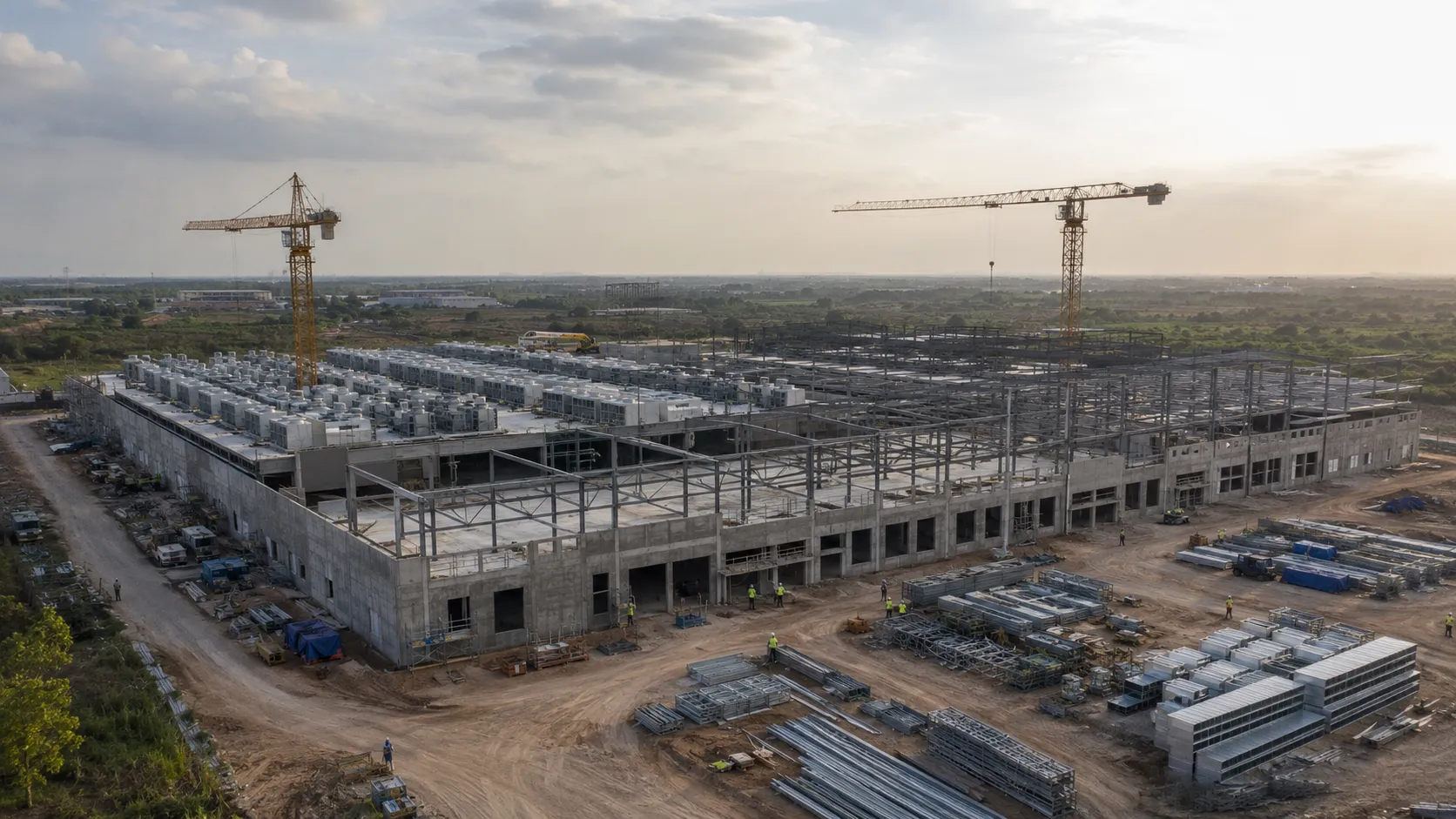
The reasons are familiar to anyone who watched Johor: cheaper land, a young English-speaking workforce, and a government that made itself easier to deal with. The old rule capped foreign ownership in many public services at 40%, so a foreign operator needed a local partner holding the majority. Republic Act 11659, signed in March 2022, narrowed the definition of a public utility and opened the rest to full foreign ownership. The money followed.
A permanent office widens the pool of projects Sum Technology can bid for, and the IPO proceeds are funding it. The risk is that a bigger competitor establishes itself in Manila first.
7. What you are paying for all this
At the 28 sen IPO price the company was valued at about RM126 million, or 20.74 times trailing earnings, against a sector average nearer 14.29 times. It closed its first day at 52.5 sen, a market capitalisation of RM236.3 million, which is close to 39 times the same earnings. By late June it was trading around 47 sen, still roughly 35 times.
Whether that is expensive depends on the growth you believe. Management has talked about 30% to 50% annual earnings growth. On those numbers the stock sits nearer 13 times FY2027 earnings, which is not demanding. If projects slip or a key client trims spending, you are holding an expensive stock with a 9% margin and seven months of confirmed work. Today’s price assumes management’s growth numbers come through.
If you want to check the numbers on any Bursa or US-listed company yourself, a zero-commission account like Webull or a comparable broker gives you the filings and the price history in one place. Some links here are affiliate links, and Finlit may earn a commission at no extra cost to you.
8. The 30 second test for any hyped stock
Run these three questions in order the next time a stock with “AI” or “chip” in the story starts trending. They will get you further than any hot tip.
The three questions
Is the demand structural or cyclical?
Structural demand holds up whether the economy is good or bad, because it is tied to something that does not switch off. As long as phones, cars and AI need chips, someone has to build the room. Cyclical demand rises in good times and falls in bad ones, which is how tourism, property and consumer spending behave.
Is this a pickaxe seller or a gold miner?
A miner has to find gold to get paid, so everything depends on things outside its control. A pickaxe seller gets paid as long as people keep digging. Ask whether the company earns because its customers win, or simply because its customers show up.
Can the margins hold?
A 9% net margin leaves little room for mistakes, so ask whether the business gets stronger as it grows or more fragile. Each new tier-one client that qualifies you makes you harder to replace and opens the door to larger projects, which is the direction you want. None of that is guaranteed, so check the margin in every quarterly report.
What to actually do with this
- Read the risk factors section of the prospectus before the business description. That is where order book cover, customer concentration and margin history live, and it is the part almost nobody reads.
- Treat oversubscription as a measure of scarcity. A 110 times oversubscribed offer tells you the allocation was small and nothing else. The same applies to any IPO you are tempted by.
- Divide the order book by annual revenue. Under one times means the schedule needs constant refilling, so check it in every quarterly report instead of once at listing.
- Check the net margin as well as the revenue growth. Revenue rising while the margin falls means the company is buying work with price cuts.
- Size the position for a small cap with lumpy earnings. Small companies can move violently in both directions, and a 42% revenue swing in one year is normal here.
- Follow the client spending more than the share price. Approved investment into Malaysia’s semiconductor and E&E sector, plus data centre construction in Johor and the Philippines, are the leading indicators for this business.
More companies attached to the semiconductor and data centre story will list to catch the same hunger, and the pattern will repeat. Sum Technology has real customers and real risks, which is more than a lot of hyped listings can say. Whoever read the prospectus this time will already know what to look for in the next one.
If you want the running commentary on Bursa listings, market news and what I am actually watching week to week, that lives in the FAQ Alpha Club.